
Deel Review 2026: The Brutal Truth About This Global Payroll Darling
Let’s be brutally honest about Deel right from the start, because someone has to cut through the marketing noise.
If you are running a business in 2026 and still trying to figure out how to pay a contractor in Estonia without breaking the law, you are already behind.
You have probably seen their ads everywhere, promising to make global hiring as easy as ordering a pizza.
But is it actually that simple, or are they just selling you a beautifully packaged legal headache?
This Deel review is going to tear down the facade and show you exactly what you are paying for when you sign up.
I am not here to coddle you or parrot their PR releases like every other software review site on the internet.
I am here to tell you if this platform is going to save your sanity or completely destroy your profit margins.
Let us get one thing straight: hiring globally is an absolute nightmare of compliance, taxes, and hidden fees.
If you think you can just wire money to a developer in Brazil and call it a day, you are begging for a massive lawsuit.
This is exactly the fear that they prey upon to get you into their ecosystem.
And frankly, they are extremely good at it.
But being good at marketing does not automatically mean they are the best solution for your specific company.
You need to know if the underlying tech actually works when it is time to run payroll on a Friday afternoon.
You also need to know if their customer support is going to leave you on read when a contractor’s payment gets lost in the ether.
Because when you are dealing with people’s livelihoods, “Oops, our system had a glitch” is not an acceptable excuse.
So strap in, because we are going to dissect every single piece of this platform.
I will tell you what works, what completely sucks, and whether you should actually trust them with your payroll.
If you are easily offended by the truth, you might want to stop reading now.
But if you want to protect your business and actually scale your team without going insane, keep going.
Before we dive deep, if you just want to skip the reading and try it yourself, you can check them out right here.
Table of Contents
Deel Global Compliance & Features
Let us talk about the main reason you are even considering this platform: compliance.
The promise is that they will handle all the terrifying legal jargon in over 150 countries so you do not have to.
And to their credit, they actually do have a massive network of legal entities set up across the globe.
This means you do not have to spend months and tens of thousands of dollars setting up a subsidiary in a country just to hire one engineer.
You basically use them as an Employer of Record (EOR), which means they technically hire the person, but the person works for you.
It sounds like a magical loophole, and in many ways, it is exactly that.
But do not let the slick dashboard fool you into thinking it is completely risk-free.
You still need to make sure you are not misclassifying employees as contractors, which is a massive trap for young startups.
They have tools to help you assess the risk of misclassification, but at the end of the day, the liability can still bite you.
The platform automatically generates localized contracts that comply with local labor laws.
This is a godsend because writing a compliant contract for someone in Germany is wildly different than writing one for someone in Japan.
They keep these contracts updated as local laws change, which is something you could never do on your own without a small army of lawyers.
When a contractor signs the contract, everything is stored securely in their system.
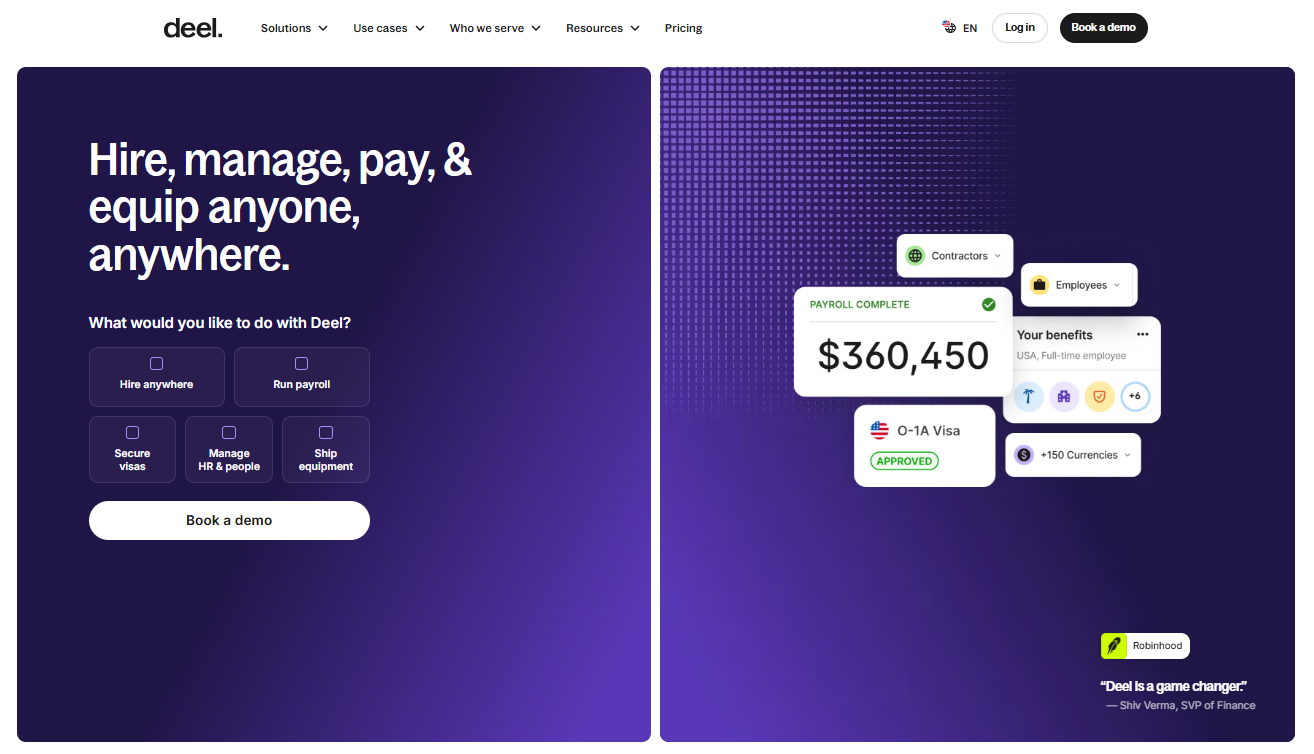
You can easily collect all necessary compliance documents, like W-8BENs and local tax forms, directly through the onboarding flow.
If a document is missing or about to expire, the system actually hounds the contractor to update it, taking that tedious task off your plate.
This level of automation is where Deel truly shines and justifies its existence.
However, you have to remember that they are essentially a middleman in a highly complex legal web.
If a local government decides to audit your global workforce, you better hope their localized contracts are as bulletproof as they claim.
They offer a feature called Deel Shield, which claims to take on total liability for misclassification.
But let me tell you, you will pay a massive premium for that peace of mind.
It is basically an insurance policy for founders who are terrified of getting sued by a foreign government.
Whether that premium is worth it depends entirely on your risk tolerance and your budget.
But as far as basic compliance goes, it is undeniably better than trying to hack it together with random PDFs and wire transfers.
They have essentially productized international labor law.
And while it is not perfect, it is leaps and bounds ahead of the chaotic spreadsheet you are probably using right now.
Deel Pros and Cons
Let us strip away the marketing fluff and look at the raw pros and cons of using this system.
Here is what actually matters when you are in the trenches of global hiring.
Pros:
- The sheer number of countries they support is staggering and frankly unmatched by most competitors.
- You can onboard a contractor in a new country in literal minutes, not weeks.
- They support a ridiculous number of withdrawal methods for contractors, including crypto, which developers absolutely love.
- The user interface is genuinely slick and does not make you want to punch your monitor.
- Automated tax form collection saves you from a massive headache come tax season.
- You can manage both contractors and full-time EOR employees in one unified dashboard.
- Their API allows you to integrate the platform with your existing HR tech stack if you have developers to set it up.
- Paying your entire global team with a single mass click is incredibly satisfying.
- The built-in misclassification risk assessment tools are actually quite useful for avoiding legal landmines.
Cons:
- Customer support can be incredibly slow and sometimes gives generic, unhelpful responses when you have a nuanced issue.
- The pricing for the Employer of Record (EOR) service is extremely high and can easily eat into your margins.
- They hit you with hidden exchange rate fees that are not always obvious when you are funding payroll.
- If a contractor’s payment gets delayed, the transparency on where the money actually is can be frustratingly opaque.
- The platform can feel overwhelmingly complex if you just want to hire one simple contractor.
- They aggressively push their premium add-ons, which gets annoying very fast.
- Some local employment laws are so complex that even their localized contracts require manual review.
- Terminating an EOR employee can still be a bureaucratic nightmare depending on the country.
Is Deel For You?
This is the multi-thousand dollar question you need to answer before you commit.
Deel is not a charity; they are a highly aggressive hyper-growth company designed to extract money from your payroll budget.
If you are a solo founder hiring one virtual assistant in the Philippines, this platform is absolute overkill.
You do not need an enterprise-grade compliance engine just to send five hundred bucks a month to a freelancer.
You can use something much simpler and cheaper for that scenario.
But if you are a funded startup scaling a remote team across ten different time zones, you desperately need this.
When you have engineers in Poland, designers in Brazil, and customer support in South Africa, compliance becomes a life-or-death issue for your company.
If you try to manage that kind of global complexity manually, you will eventually make a mistake that costs you your business.
Deel is built specifically for companies that prioritize speed and compliance over cost-saving.
If your primary goal is to hire the best talent regardless of geography, and you want them onboarded by tomorrow, this is your tool.
It is also highly recommended if you plan on raising venture capital.
Investors will scrutinize your compliance, and having this platform in place proves you are not running a shady, off-the-books operation.
However, if you are extremely price-sensitive and every dollar counts, you are going to hate their EOR fees.
Paying nearly six hundred dollars a month just for the privilege of employing someone in another country is a bitter pill to swallow.
You have to calculate whether the legal protection is worth that steep premium for your specific business model.
In short, use it if you are scaling fast and need a bulletproof global HR infrastructure.
Run away if you are a tiny bootstrapped business looking for a cheap way to pay freelancers.
Do not let their sleek onboarding flow convince you to buy a Ferrari when all you need is a bicycle.
Getting Started with Deel
If you have decided to take the plunge, getting started is admittedly very smooth.
They have optimized their onboarding funnel to capture your information before you even have time to second-guess yourself.
You sign up, enter your company details, and you are immediately dropped into the main dashboard.
The first thing you need to do is verify your business, which usually just involves uploading some basic incorporation documents.
Once you are verified, you can start creating contracts.
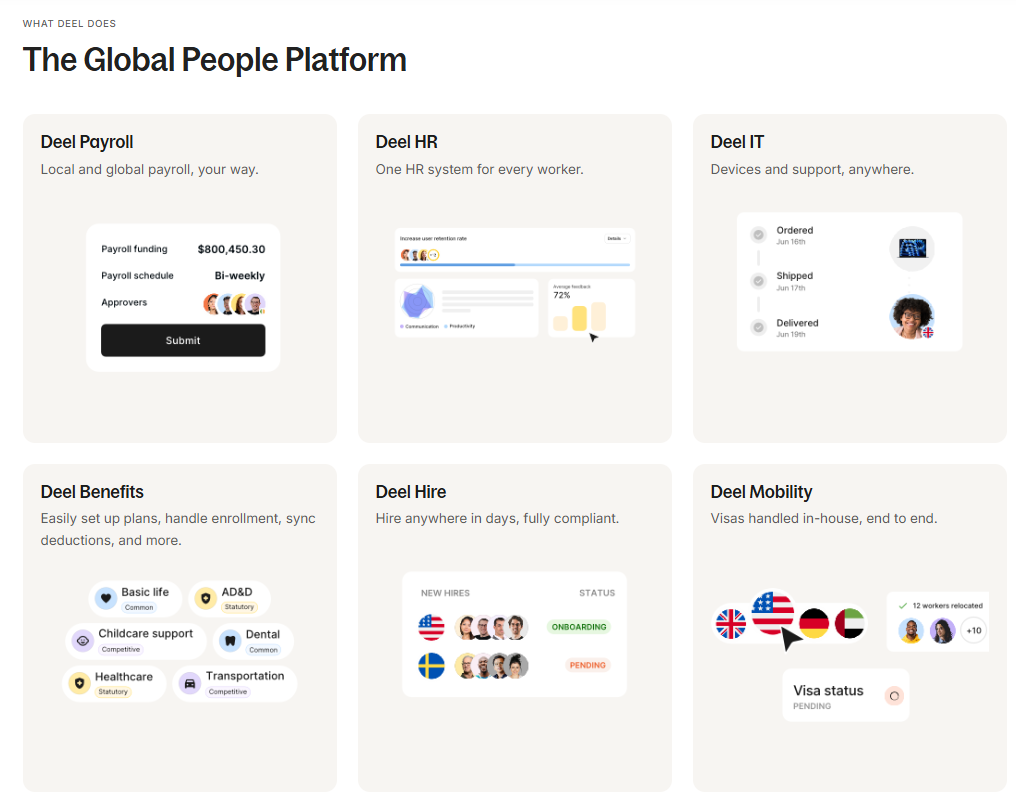
You click “Create a Contract,” choose whether it is a Fixed Rate, Pay As You Go, or Milestone contract.
You fill in the contractor’s details, define the scope of work, and set the payment terms.
The platform then magically generates a localized contract that you can review.
You sign it digitally, and an email is fired off to your new hire.
The contractor then goes through their own onboarding flow, where they upload their ID, fill out their tax forms, and choose how they want to get paid.
This entire process is entirely self-serve and requires almost zero intervention from you.
It is a beautiful thing to watch when it works perfectly.
You do not have to chase people for their W-8BEN forms or ask them for their bank routing numbers over Slack.
The system handles all the annoying administrative nagging for you.
Once the contractor is onboarded, they show up in your active team list, and they are ready to be paid.
The whole setup can literally take less than fifteen minutes if both parties are responsive.
This speed to hire is the primary value proposition of the entire platform.
Because when you find an incredible developer in a hot market, you cannot afford to wait two weeks for legal to draft a contract.
You need to lock them in immediately, and this software allows you to do exactly that.
In-Depth Deel Payroll Breakdown
Now let us talk about the lifeblood of your business: actually moving money to your team.
Running payroll globally is traditionally a fragmented, error-prone disaster involving multiple banks and wire transfer fees.
Deel attempts to consolidate this chaos into a single, massive “Pay” button.
When it is time for payroll, the platform aggregates all of your active contracts and calculates the total amount owed.
This includes fixed salaries, approved hourly timesheets, and any expenses your team has submitted.
You are presented with one massive invoice in your base currency.
You fund that invoice using a bank transfer, ACH, or even a credit card if you enjoy paying absurd processing fees.
Once they receive your funds, they handle the complex logistics of distributing the money to dozens of different countries.
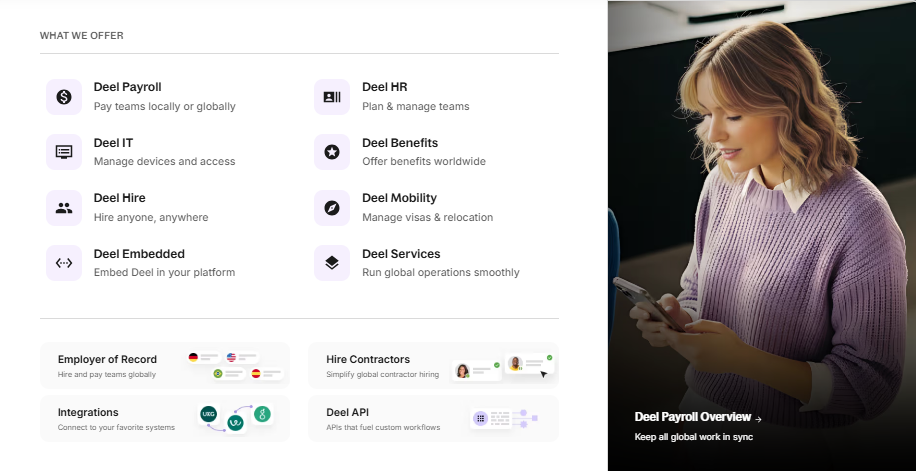
This is where their true infrastructural power becomes obvious.
They have built relationships with payment providers worldwide to ensure the money actually gets where it needs to go.
Contractors can choose to withdraw their earnings via bank transfer, PayPal, Payoneer, or even Coinbase if they want crypto.
Giving your team the flexibility to choose their withdrawal method is a massive perk that helps with retention.
However, this is also where you need to be extremely vigilant about hidden costs.
When they convert your USD into local currencies, they use an exchange rate that includes a markup.
This spread is how they quietly make a massive amount of money on the backend of every transaction.
They also charge withdrawal fees to the contractors depending on the method they choose.
So while the process is incredibly convenient for you as the employer, it is not entirely frictionless from a financial perspective.
If a payment gets flagged by a local bank, it can sometimes get stuck in limbo for days.
When this happens, you will quickly discover how frustrating their support system can be.
You will often get automated responses telling you to wait, while your contractor is panicking about paying their rent.
It does not happen often, but when it does, it is highly stressful.
Despite these flaws, clicking one button to pay a team spread across fifteen countries is undeniably powerful.
It eliminates the need for an entire finance department dedicated to international wires.
You just have to accept that you are paying for this extreme convenience through invisible exchange rate margins.
For most scaling companies, the time saved easily outweighs the backend costs.
Deel Pricing Plans and Hidden Fees
Let us tear down the pricing, because this is where a lot of founders get completely blindsided.
They advertise a very attractive starting price for contractors, but the reality is much more complex.
If you are just hiring independent contractors, the base price is usually around $49 per active contract per month.
This sounds reasonable for the compliance and automated invoicing you receive.
But remember, you are paying this fee every single month for every single contractor, whether they work five hours or fifty hours.
If you have fifty contractors, you are dropping two and a half grand a month just for the software.
Where the pricing truly explodes is when you need to hire full-time employees using their EOR service.
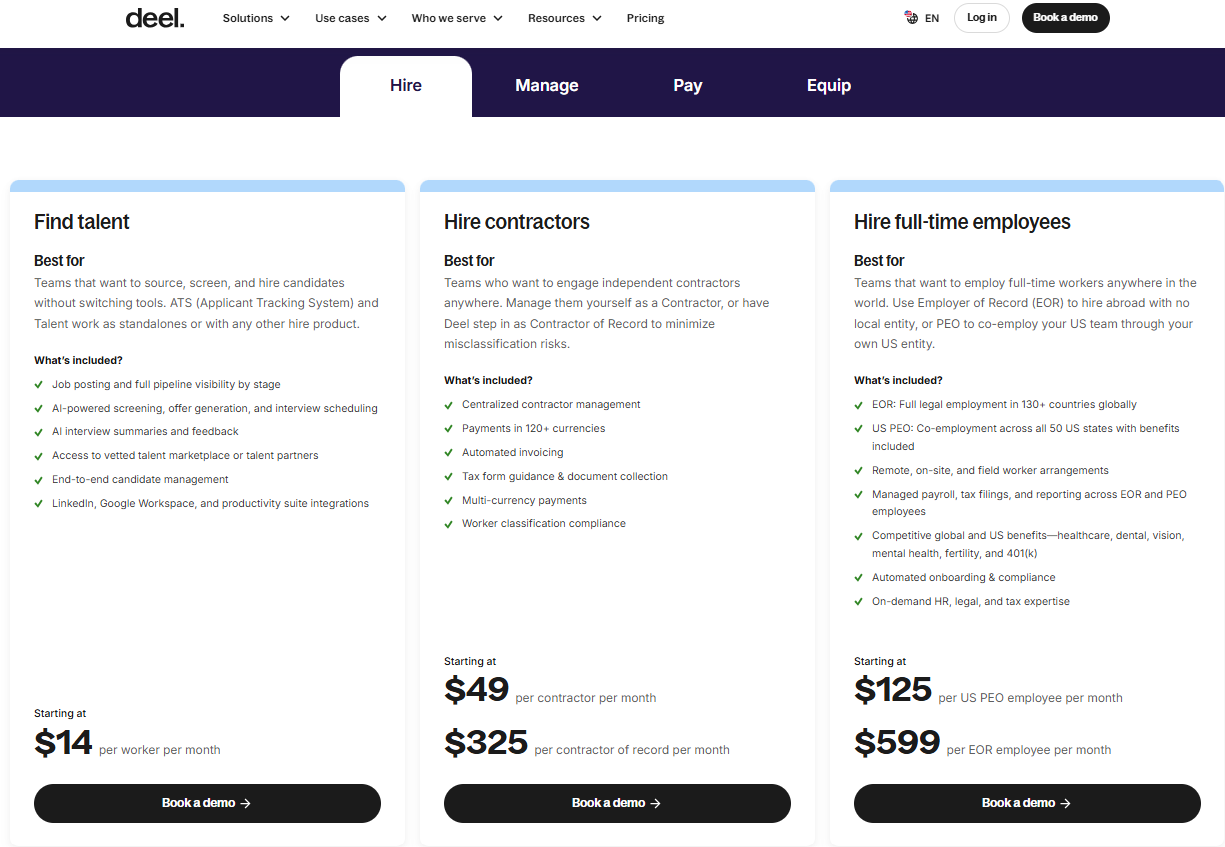
The EOR pricing starts at an eye-watering $599 per employee per month.
Let that sink in.
You are paying six hundred dollars a month, per person, just for the legal structure to employ them.
This does not include their actual salary, their benefits, or their taxes.
If you hire ten people through the EOR, you are spending over seventy thousand dollars a year just on Deel fees.
This is why I told you earlier that bootstrapped businesses should run far away.
They also aggressively upsell you on Deel Shield, which guarantees misclassification protection, for an additional fee per contractor.
And let us not forget the aforementioned exchange rate markups and withdrawal fees that silently drain value from the transaction.
They have also introduced a global payroll product for companies that own their own entities, which has its own opaque pricing structure.
The bottom line is that this platform is a premium product with a premium price tag.
You are paying for the massive legal infrastructure they have built worldwide.
Do not sign up thinking this is a budget tool; it is an enterprise-level expense disguised with a slick startup interface.
Make sure you do the math on exactly what this will cost you at scale before you get locked into their ecosystem.
Because once your entire global team is onboarded, migrating away from them is a nightmare you do not want to face.
Final Conclusion: Is Deel Worth It?
It is time for the brutal final verdict on this global payroll giant.
Deel is unequivocally the most powerful and comprehensive tool on the market for hiring and paying a global workforce.
They have solved a genuinely massive problem that used to require teams of expensive international lawyers.
The ability to onboard an engineer in Romania in ten minutes is nothing short of revolutionary for fast-moving startups.
The compliance features, the automated tax forms, and the flexible withdrawal methods are best-in-class.
If you have venture funding and you need to scale a remote team aggressively without breaking international laws, you absolutely need to use Deel.
It will save you from catastrophic legal mistakes and allow you to focus on actually building your product.
However, the cost is astronomically high, especially if you rely heavily on their EOR services.
The hidden exchange rate margins and the occasionally useless customer support are bitter pills you will have to swallow.
If you are a small business looking to save a few bucks on international wires, this is not the tool for you.
But if you value speed, compliance, and convenience over raw cost savings, there is simply no better option available right now.
It is a necessary evil for the modern, globally distributed company.
You will hate paying their invoices, but you will sleep much better at night knowing you are not going to jail for tax evasion in a country you have never visited.
Deel Alternatives
If reading this review made you sick to your stomach about the pricing, you do have other options.
You should definitely look into Gusto if your hiring is primarily focused within the United States.
Gusto is vastly superior for domestic payroll and benefits, even though their international features are still catching up.
Another major competitor is Remote.com, which offers a very similar EOR service but often with a slightly more transparent, flat-rate pricing model.
OysterHR is also fighting fiercely in this space and is worth a demo if you are looking to compare EOR costs.
Finally, if you just want to send cheap international payments without the heavy compliance layer, you can look at Wise or Payoneer.
But be warned: using basic payment tools means you are taking on 100% of the compliance risk yourself.
If you want the safety net, you are going to have to pay a premium to a platform like this one.
Choose wisely, because migrating global payroll providers is a fresh level of hell you want to avoid at all costs.
