
Deel Pricing 2026: Exposing the Hidden EOR Fees They Don’t Want You to See
Deel pricing is arguably one of the most frustrating, opaque, and wildly expensive things a scaling startup will ever have to deal with in 2026.
If you are a founder trying to hire a global workforce, you have undoubtedly stumbled across their massive marketing machine promising effortless international payroll.
But before you blindly hand over your credit card and lock yourself into their ecosystem, we need to have a very serious conversation about what you are actually paying for.
They sell you the dream of borderless hiring, but they conveniently bury the terrifying reality of their hidden markup fees deep in the fine print.
This is not going to be a sugarcoated, sponsor-friendly breakdown of their features like you see on every other tech blog.
I am going to rip apart the Deel pricing model piece by piece and expose exactly how they are extracting thousands of dollars from your budget every single month.
If you are easily offended by aggressive honesty, or if you actually enjoy overpaying for software, you should probably stop reading right now.
But if you want to protect your runway and stop hemorrhaging cash on unnecessary Employer of Record markups, pay very close attention.
Because by the end of this deep dive, you will know exactly whether this platform is a necessary evil for your global compliance or a massive financial mistake.
Before we get into the brutal teardown, if you are a funded startup that literally does not care about burning cash for convenience, you can check them out right here.
Table of Contents
Deel Global Compliance & Features
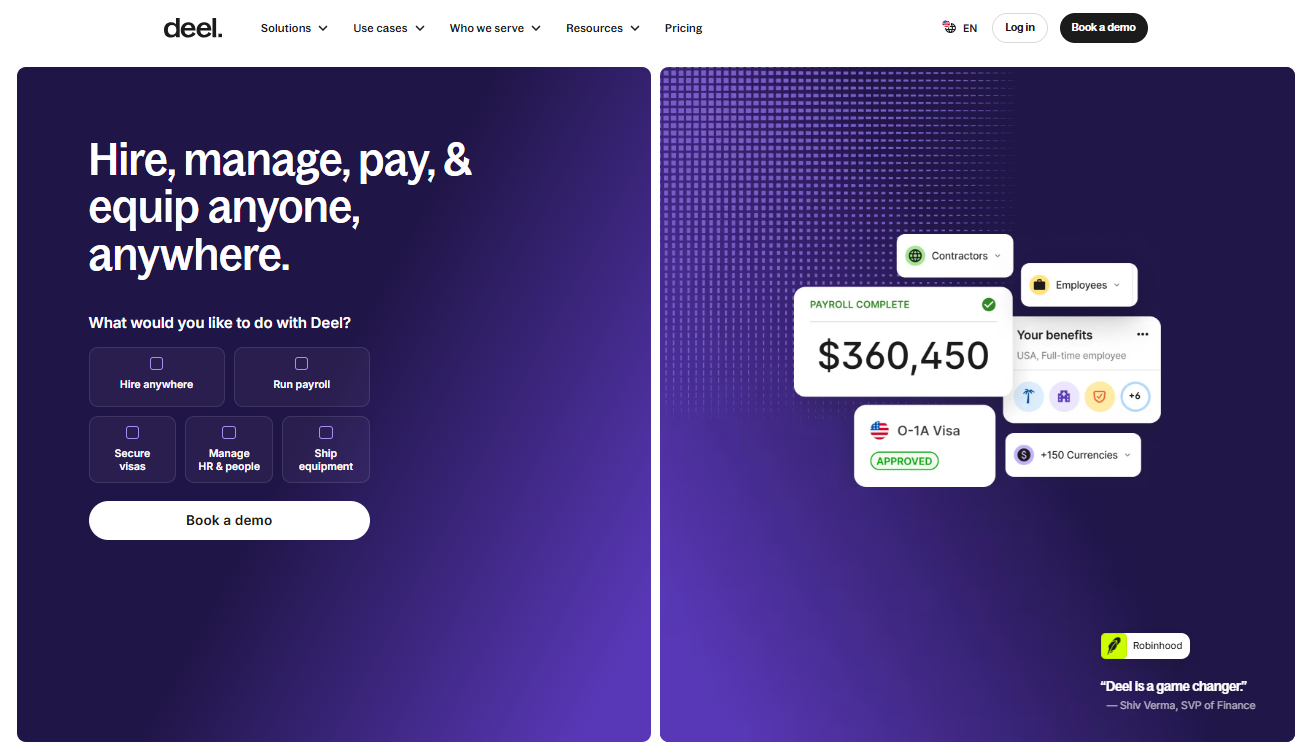
When you look past the absurd Deel pricing structure, you do have to acknowledge the absolute behemoth of a compliance engine they have built.
Their primary selling point is that they take the excruciating legal nightmare of hiring in 150 different countries and reduce it to a few clicks.
If you have ever tried to manually draft a compliant employment contract for a developer in Brazil, you know it requires a small army of expensive international lawyers.
They eliminate that massive legal barrier by providing automated, localized contracts that supposedly comply with local labor laws.
They act as the Employer of Record (EOR), which means they technically hire the employee on your behalf and take on the local liability.
This sounds like an incredible deal until you start looking at the invoice they send you at the end of the month.
The sheer volume of countries they support is impressive, and it genuinely allows a company to become a global entity almost overnight.
You can onboard a new contractor in minutes, and the system automatically collects all their necessary tax forms like the dreaded W-8BEN.
This automated tax form collection is a lifesaver when audit season rolls around and you are scrambling for paperwork.
They also offer built-in misclassification risk assessment tools, which are designed to scare you into upgrading to their more expensive tiers.
If a local government decides to audit you, they claim their localized contracts will protect you from massive fines.
But you have to remember that they are an aggressive hyper-growth tech company, not a boutique legal firm offering you personalized white-glove service.
If something goes horribly wrong with an international labor dispute, you are still going to face a mountain of stress and bureaucracy.
Their feature set is undeniably vast and powerful, but it is built specifically for companies that prioritize raw speed over cost efficiency.
You are paying a massive premium for the privilege of not having to think about international tax law, which is a luxury many small businesses simply cannot afford.
Deel Pros and Cons
Let us break down the raw, unfiltered reality of using this platform, starting with what actually works and ending with what will drive you insane.
When you are evaluating a tool this expensive, you need to look past the slick UI and focus on the actual mechanics of moving money across borders.
Pros:
- The ability to legally hire someone in almost any country on earth without setting up a subsidiary is a massive superpower for scaling startups.
- Their onboarding flow is incredibly fast, allowing you to lock in top talent before a competitor snatches them up.
- They offer a staggering variety of withdrawal methods for contractors, including crypto, which makes your team extremely happy.
- The user interface is clean, intuitive, and does not require a dedicated training manual to understand.
- Automated compliance document collection saves your HR team hundreds of hours of mind-numbing administrative work.
- The platform consolidates your entire global workforce—both EOR employees and independent contractors—into a single unified dashboard.
- Paying fifty people in twenty different currencies with a single mass payment click is an incredibly satisfying experience.
- Their API allows for deep integrations with your existing HR and accounting software stack.
- The misclassification tools provide a decent baseline of protection against accidental labor law violations.
Cons:
- The base Employer of Record (EOR) pricing is astronomically high and can quickly become your second largest operational expense after salaries.
- They bake massive, hidden exchange rate markups into every cross-border transaction, quietly draining value from your payroll budget.
- Customer support is notoriously slow, heavily reliant on useless chatbots, and often unable to resolve nuanced international banking issues quickly.
- If a contractor’s payment gets delayed by a local bank, the lack of transparency on where the funds actually are is infuriating.
- They are incredibly aggressive about upselling you on premium features like Deel Shield, which adds even more per-head costs to your invoice.
- The platform is massive overkill if you are just trying to pay a single virtual assistant or freelance writer.
- Firing an EOR employee can still be a complex, bureaucratic nightmare depending on the specific labor laws of their home country.
- Terminating a contract and moving your global team off their platform is a massive, painful undertaking designed to lock you in forever.
Is Deel For You?
If you are a bootstrapped founder counting every single penny to survive the next quarter, do not even look at this platform.
The Deel pricing model is explicitly designed to extract maximum value from heavily funded startups that do not care about optimizing their backend operational costs.
If you are just hiring a few independent contractors and you are willing to take on a tiny bit of compliance risk yourself, use something cheaper.
You do not need an enterprise-grade legal fortress just to send a few hundred dollars a month to a freelance graphic designer in the Philippines.
However, if you just raised a Series A and your investors are demanding that you scale your engineering team across five different time zones immediately, this is exactly what you need.
When you are dealing with massive global complexity, the risk of a misclassification lawsuit or an international tax audit becomes a legitimate existential threat to your company.
Deel is built to mitigate that specific existential threat, and they charge a massive premium for providing that peace of mind.
If your core business strategy relies on hiring the absolute best talent in the world regardless of geography, and you need them working tomorrow, you have to pay the toll.
You are not buying software; you are buying speed and a legal shield against foreign governments.
If your company can easily absorb an extra sixty thousand dollars a year in EOR fees without flinching, then you should absolutely sign up right now.
But if seeing a massive monthly invoice for “software fees” makes you sick to your stomach, you need to find a leaner, more transparent alternative.
Getting Started with Deel
If you have decided to surrender your budget to their ecosystem, the actual setup process is dangerously frictionless.
They have engineered their onboarding funnel to be so smooth that you will be creating contracts before you fully realize what you are committing to.
You simply create an account, upload some basic incorporation documents to verify your business, and you are immediately dropped into the command center.
Creating your first contract takes less than five minutes if you know the parameters of the deal.
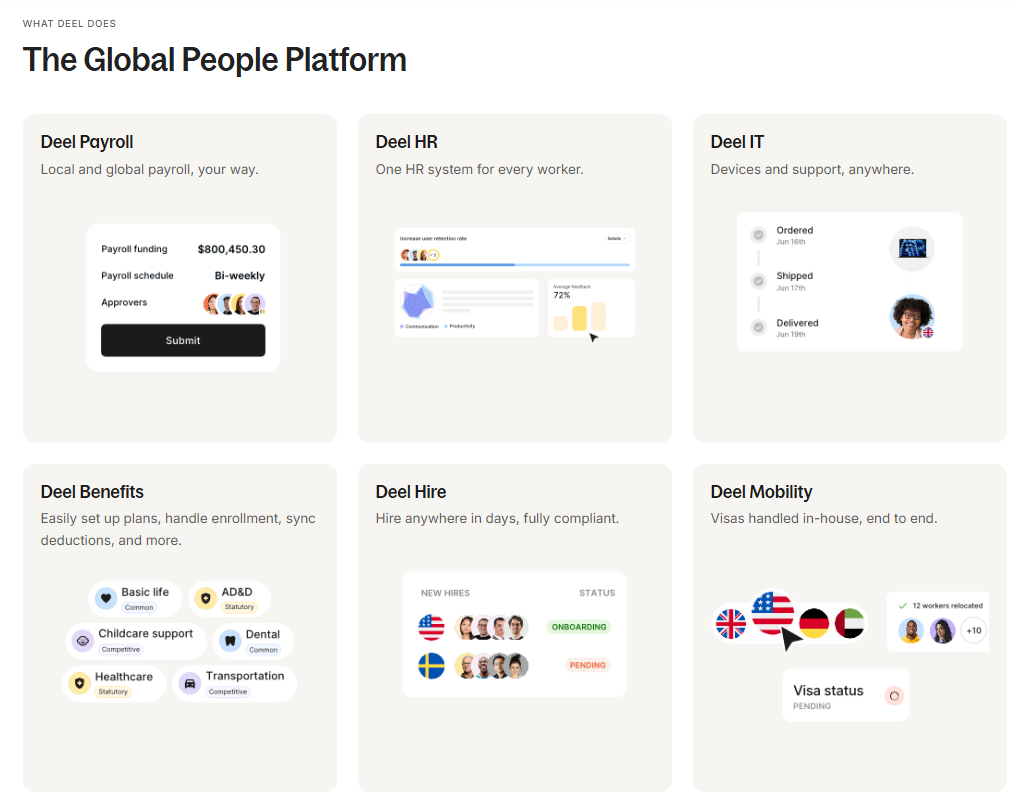
You select whether you are hiring a contractor or a full EOR employee, define the payment structure, and the system instantly spits out a localized legal document.
You digitally sign the contract, and an automated email is blasted out to your new hire with a link to complete their own onboarding.
The contractor is then guided through a highly polished flow where they upload their passport, fill out their tax forms, and select their preferred withdrawal method.
This self-serve onboarding is genuinely excellent and removes almost all the friction from the hiring process.
You do not have to chase them for their banking details over email, and you do not have to worry about whether they filled out their W-8BEN correctly.
Once they are fully onboarded, they appear in your active team list, and they are immediately ready to be included in the next payroll run.
The speed from making a verbal offer to having a legally compliant, ready-to-work team member is incredibly fast.
This velocity is exactly what they use to justify their insane pricing, and to be fair, it is a very compelling argument when you are in a rush.
In-Depth Deel Payroll Breakdown
Now we need to talk about the actual mechanics of moving money, because this is where the hidden Deel fees truly start to bleed your budget.
When it is time to run payroll, the system aggregates all of your active contracts, timesheets, and approved expenses into one massive invoice.
You are presented with this invoice in your base currency, usually USD, and you are expected to fund it via bank transfer or ACH.
If you are foolish enough to fund it with a credit card, you will be hit with processing fees that will make you want to cry.
Once your funds clear their accounts, they handle the mind-bending logistics of routing that money to dozens of different local banking systems around the world.
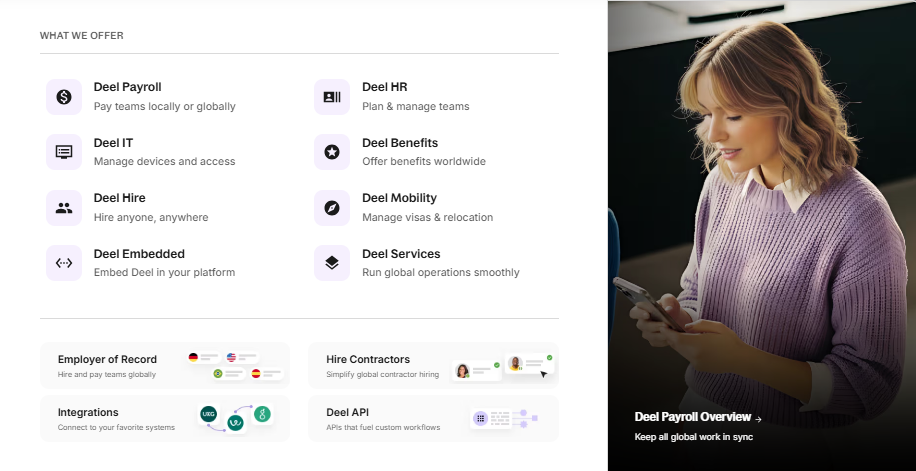
This is a massive logistical achievement, and it genuinely saves your finance team from spending three days staring at SWIFT codes.
Your contractors receive the money in their Deel wallet, and they can choose to withdraw it to their local bank, PayPal, Payoneer, or even as cryptocurrency.
This flexibility is a massive perk for your team, but it comes at a steep, hidden cost to you.
When the platform converts your USD into the contractor’s local currency, they apply an exchange rate markup that is significantly worse than the mid-market rate.
This spread is entirely opaque, and it is a massive, quiet revenue stream for the platform.
You might think you are paying a contractor exactly three thousand dollars, but by the time the exchange rate markup and the withdrawal fees are applied, the contractor is receiving significantly less.
Or, if the contract is pegged to the local currency, you are the one paying the inflated markup to ensure they get their exact local amount.
This invisible tax on every single transaction adds up to tens of thousands of dollars a year for a sizable team.
And if a payment gets flagged or delayed by a correspondent bank, you will quickly discover that their customer support is largely useless for resolving complex banking errors.
You will be stuck waiting for days while your contractor panics, and the platform will simply tell you that it is “processing.”
You are paying a massive premium for convenience, but you are also paying hidden fees on every single dollar that flows through their system.
Deel Pricing Plans and Hidden Fees
This is the section where we expose exactly how much this platform is actually going to cost you.
Let us start with the basic contractor tier, which they heavily advertise at around $49 per active contract per month.
Fifty bucks a month to ensure a contractor is legally compliant and automatically invoiced sounds like a reasonable deal on the surface.
But you have to remember that this fee applies every single month, regardless of how much work the contractor actually did.
If you have a pool of twenty freelance writers who only submit one article a month, you are still paying a thousand dollars a month just in software fees.
And if you want absolute protection against misclassification, they will aggressively push you to upgrade to Deel Shield.
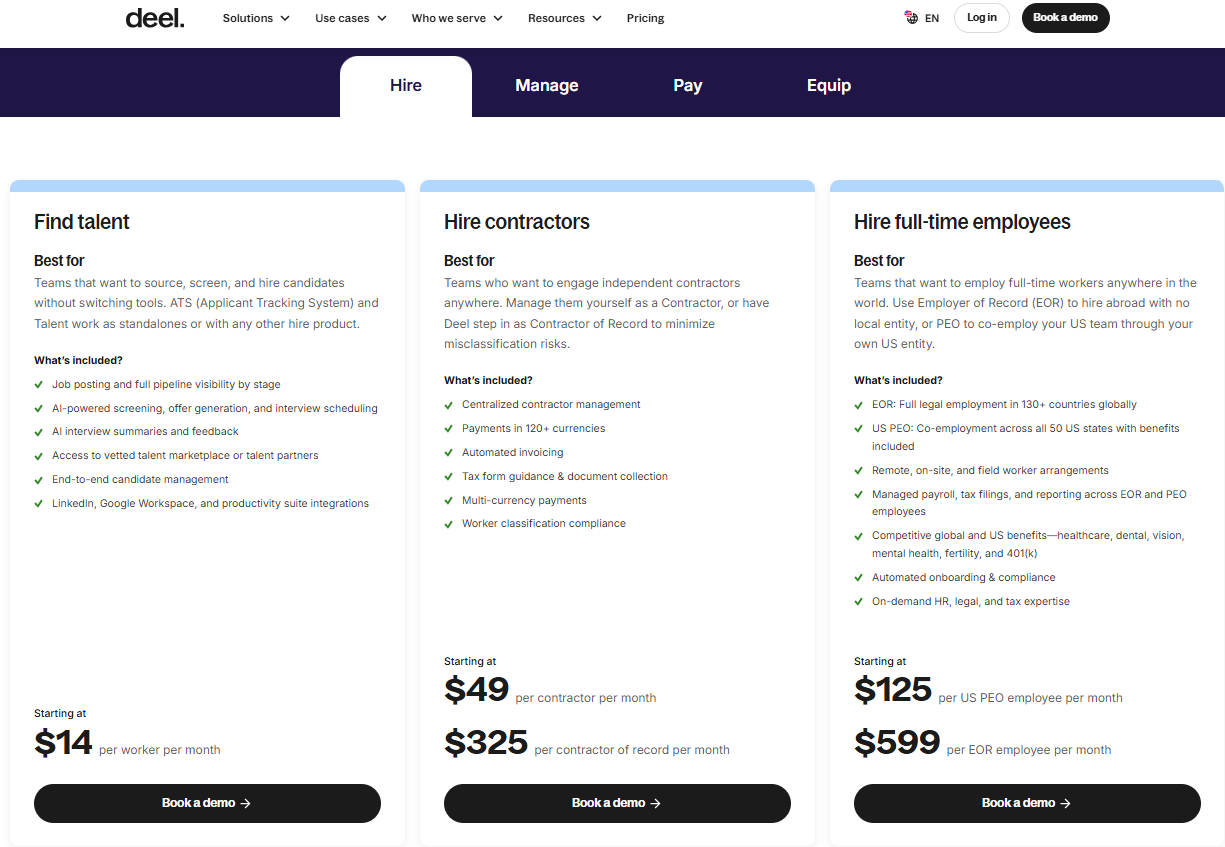
Deel Shield adds a massive per-head premium to that base $49 fee, effectively doubling or tripling your cost just for peace of mind.
But the true financial nightmare begins when you need to hire full-time employees using their Employer of Record (EOR) service.
The EOR pricing starts at a staggering $599 per employee, per month.
You are paying nearly six hundred dollars every single month just for the legal structure required to employ one person in another country.
If you build a team of ten EOR employees in Europe, you are burning over seventy thousand dollars a year entirely on Deel fees, before you even pay their salaries or taxes.
When you combine that $599 base fee with the hidden exchange rate markups on the actual payroll transfer, the true cost of using this platform is astronomical.
They also offer a global payroll product for companies that have their own entities, but the pricing for that is entirely custom and usually requires a massive minimum commitment.
Do not be fooled by their slick website; this is an enterprise-level expense designed to extract maximum revenue from your venture capital funding.
You absolutely must model out these costs before you commit, because once your team is onboarded, the switching costs to move them to a cheaper platform are massive.
Final Conclusion: Is Deel Worth It?
The final verdict on this platform is incredibly polarizing, and it depends entirely on the size of your bank account.
Deel is undeniably the most robust, fast, and comprehensive global hiring platform on the market today.
They have successfully productized international labor law, allowing you to hire a developer in literally any country in a matter of minutes.
The automated compliance features, the massive network of legal entities, and the slick UI are genuinely best-in-class.
If you are a heavily funded startup and your only objective is to scale a global team as fast as humanly possible, you have to use Deel.
It is a necessary, albeit incredibly expensive, tool for navigating the nightmare of global compliance without building your own internal legal team.
But if you care about your profit margins, the pricing model is borderline predatory.
The $599 monthly EOR fees and the hidden exchange rate markups will absolutely destroy the budget of a bootstrapped or highly cost-conscious company.
It is an incredibly powerful system that is priced exclusively for companies that have money to burn.
Use it if speed and compliance are your only priorities, but be fully prepared for the massive financial impact it will have on your runway.
Deel Alternatives
If reading this deep dive into their pricing made you physically ill, you need to look at the alternatives immediately.
If you are primarily hiring within the United States and you need robust benefits administration, Gusto is vastly superior and significantly more cost-effective.
If you need global EOR services but you want a slightly more transparent, flat-rate pricing model, you should heavily investigate Remote.com.
OysterHR is another massive player in the EOR space that is aggressively competing on price and is definitely worth taking a demo call with.
If you are just hiring independent freelancers and you are willing to handle the compliance yourself, skip the massive software platforms entirely.
You can use a tool like Payoneer or Wise to send international payments with significantly lower exchange rate markups and zero monthly subscription fees.
But remember, if you go the cheap route, you are taking on 100% of the legal and tax liability if a foreign government decides to audit your hiring practices.
Choose your poison carefully, because migrating off a global payroll provider is a logistical nightmare you only want to experience once.
