
Honest Deel Review and Alternatives (2026): The Brutal Truth About Global Payroll
If you are searching for an honest Deel review and alternatives, you are likely tired of the relentless marketing hype surrounding global payroll.
You want the brutal, unvarnished truth before you trust a platform with your entire international workforce.
And let’s be perfectly clear: making the wrong choice here can absolutely destroy your startup’s runway through hidden fees and compliance nightmares.
This is not a sugar-coated brochure designed to make you feel warm and fuzzy about borderless hiring.
This is a hardcore, deep-dive teardown of what Deel actually does, what they charge, and who should seriously consider running in the opposite direction.
We are going to dissect the good, the bad, and the outright ugly aspects of their platform in 2026.
Because the reality of Employer of Record (EOR) services is often far more complex than a slick landing page suggests.
If you are just looking for a quick and reliable way to handle your global payroll, you can skip the reading and check out Deel’s current offers right here.
But if you want to know exactly what you are getting into, buckle up and keep reading.
First, let’s talk about what Deel actually is.
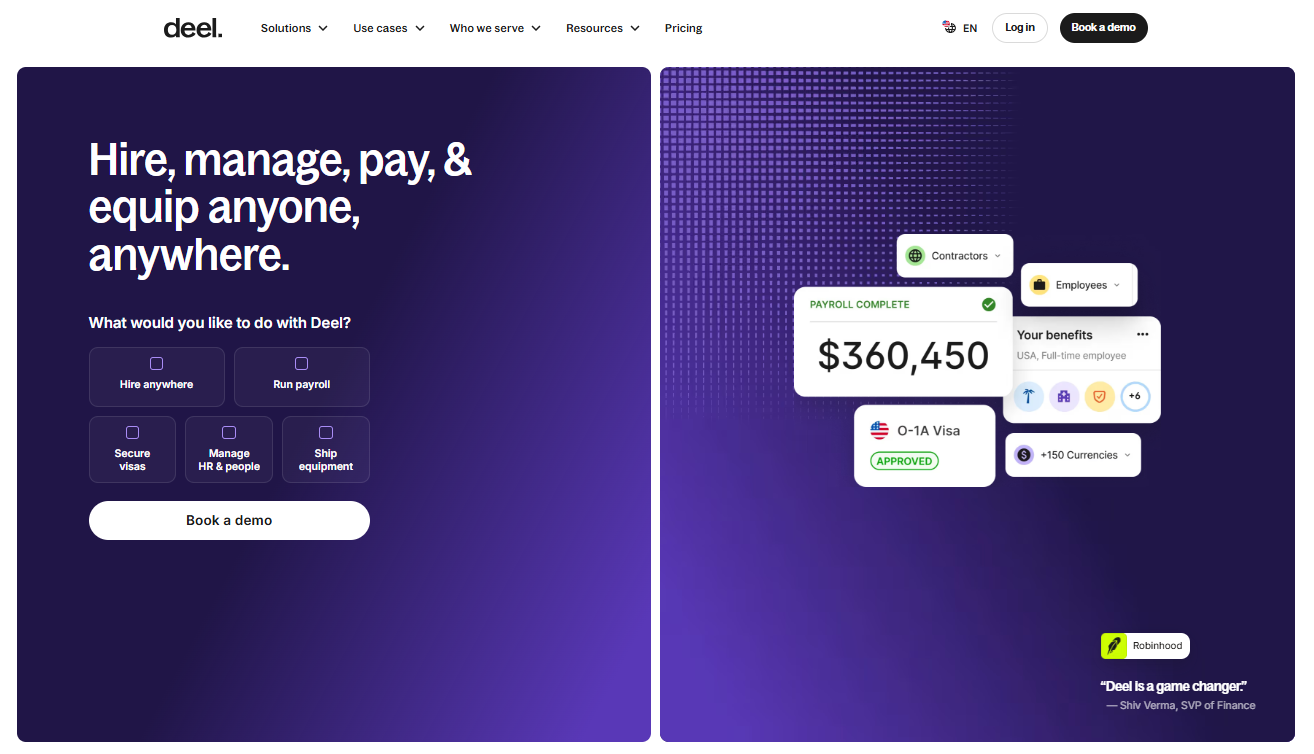
They position themselves as the ultimate all-in-one HR platform for global teams.
Their marketing engine aggressively pushes the narrative that you can hire anyone, anywhere, in five minutes flat.
And to be fair, they have built a genuinely impressive piece of software that simplifies a historically agonizing process.
Before platforms like Deel existed, hiring a developer in London or a designer in Berlin meant setting up local entities.
It meant dealing with foreign tax authorities, local labor lawyers, and endless bureaucratic red tape.
Now, you just log into a dashboard, click a few buttons, and the EOR handles the heavy lifting.
But convenience always comes at a price.
And in the world of global payroll, that price is often buried deep in the fine print.
Let’s look at their core feature set.
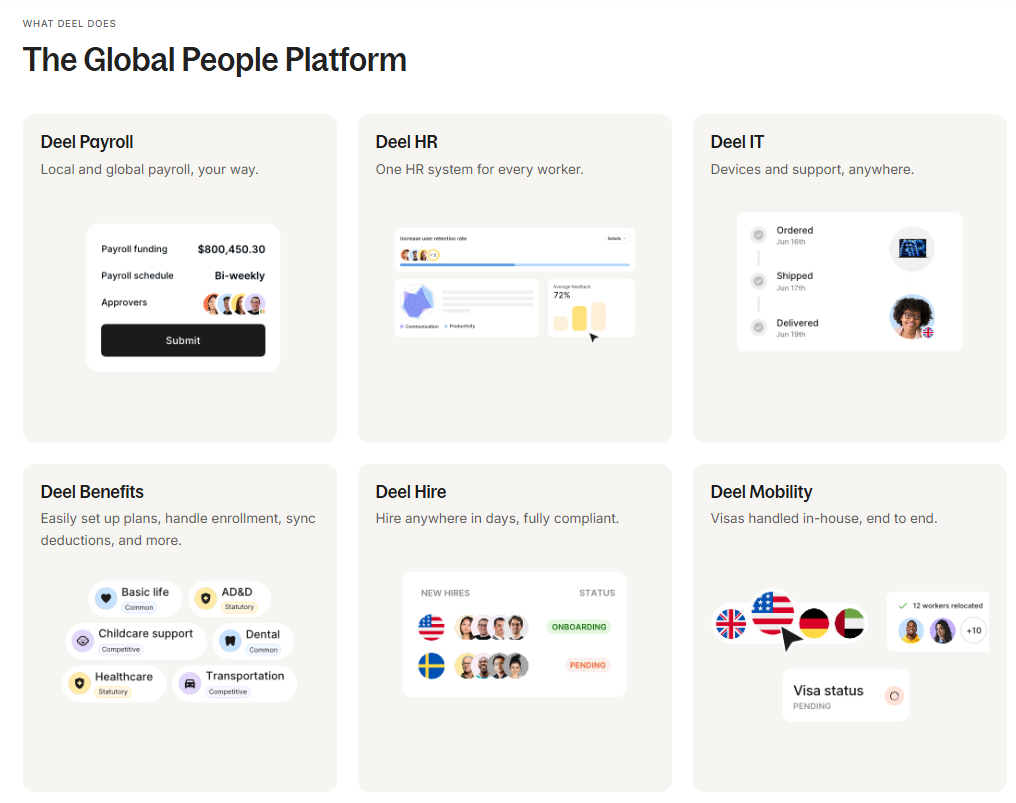
Deel offers a massive suite of tools spanning contractor management, full-time EOR employees, payroll, HR, and even IT equipment provisioning.
They are trying to be the single source of truth for your entire workforce, regardless of where they live.
Their contractor management system is arguably their strongest asset.
It is incredibly slick, highly automated, and completely eliminates the headache of chasing invoices.
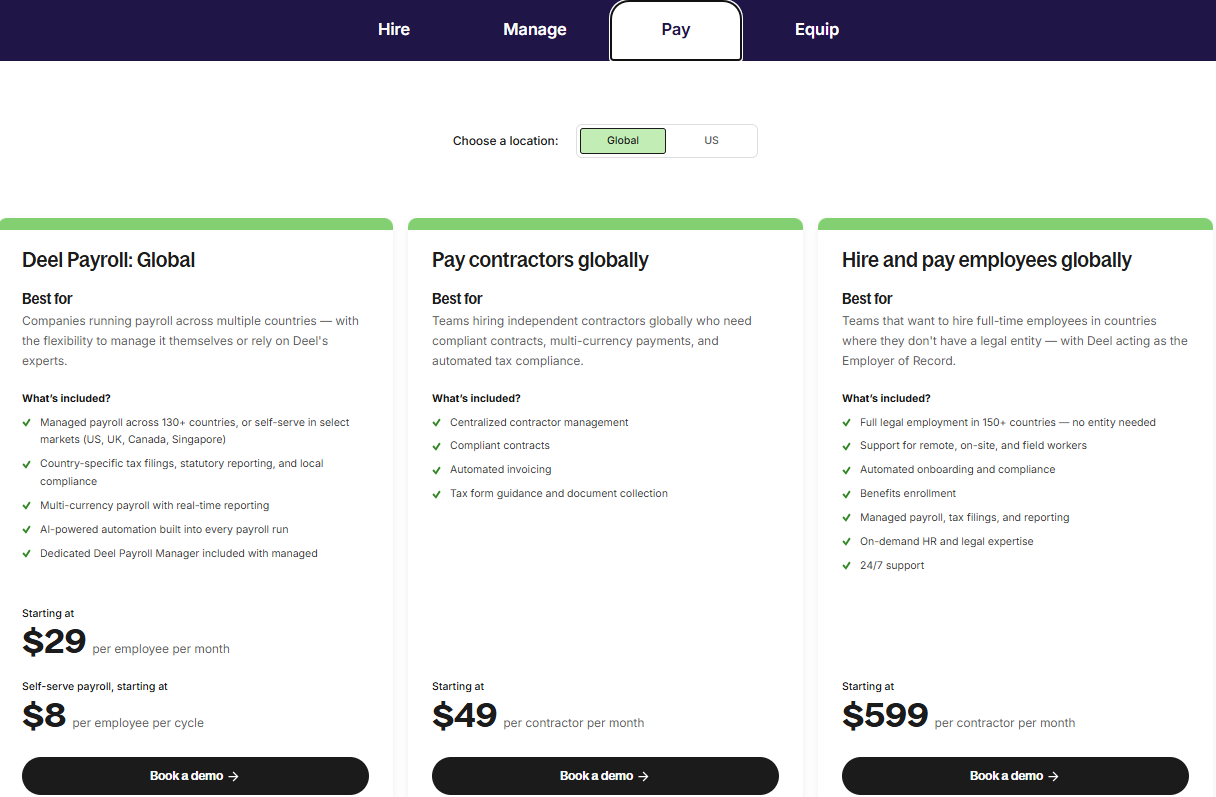
You can onboard a contractor in 150+ countries in minutes, with localized contracts that actually protect your intellectual property.
And the best part? It only costs $49 per contractor per month.
For startups relying heavily on freelancers, this is a total no-brainer.
But things get significantly more complicated when you transition from independent contractors to full-time employees.
This is where the Employer of Record (EOR) model comes into play.
When you use Deel as an EOR, they technically hire the employee on their local entity, while the employee works day-to-day for your company.
It is a brilliant loophole that allows you to bypass the need for a foreign subsidiary.
However, the cost of this convenience is steep.
Deel charges a starting rate of $599 per employee per month for their EOR service.
Let that sink in for a moment.
If you hire ten engineers in Europe through Deel, you are paying nearly $72,000 a year purely in administrative platform fees.
And that is just the base fee.
You still have to pay the employee’s salary, plus the often-exorbitant employer taxes mandated by their local government.
For example, if you read our recent guide on the true cost of hiring in the UK, you know that Employer National Insurance adds a massive 13.8% to the base salary.
Deel doesn’t make those taxes disappear; they just process them for you.
And here is where the “honest Deel review” part really kicks in: the exchange rates.
When you fund your payroll in USD to pay employees in EUR, GBP, or INR, Deel takes a margin on the currency conversion.
They are not a charity, and they do not give you the mid-market exchange rate you see on Google.
This hidden FX markup can easily add another 1% to 2% to your total payroll costs.
On a $100,000 international payroll run, that is a few thousand dollars vaporized into thin air every single month.
If you are a rapidly scaling startup burning venture capital, maybe you don’t care.
But if you are a bootstrapped founder counting every penny, these hidden fees are absolutely lethal.
This brings us to the crucial topic of customer support.
When you are dealing with people’s livelihoods and international tax law, you need immediate, competent answers.
If a payroll run fails on the 25th of the month, you cannot afford to wait 72 hours for an automated email response.
Historically, Deel’s rapid hyper-growth outpaced their support infrastructure, leading to widespread complaints on platforms like Reddit and Trustpilot.
They have invested heavily in improving this, promising dedicated account managers for larger enterprise clients.
But if you are a small startup with three contractors, you are likely relying on their standard tier of support.
And while it is generally adequate for basic questions, complex legal compliance issues can sometimes take longer to resolve than they should.
This is a stark reality of the entire EOR industry, not just Deel.
So, who is Deel actually built for?
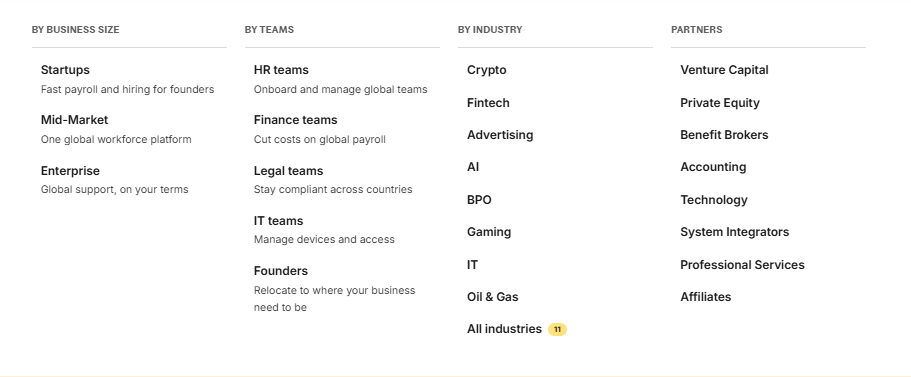
If you are a heavily funded startup or a mid-market enterprise that prioritizes speed and convenience above all else, Deel is phenomenal.
If you need to hire top talent in Brazil tomorrow and don’t care about the 2% FX markup, you should sign up for Deel immediately.
They have the infrastructure, the localized contracts, and the slick dashboard to make global expansion effortless.
But what if you are a scrappy startup operating on a tight budget?
What if that $599 monthly fee per employee makes you physically nauseous?
This is where we must discuss honest Deel review and alternatives.
Because despite their market dominance, Deel is not the only game in town.
Alternative #1: Remote.com
Remote has positioned itself as the ethical, highly-transparent alternative to Deel.
They are famous for their “Fair Price Guarantee” and their refusal to charge hidden percentages or predatory FX markups.
Their pricing is often more straightforward, making them highly attractive to cost-conscious founders.
If you want a detailed breakdown of how they compare, read our full analysis on Deel vs Remote 2026.
Remote focuses heavily on owning their own local entities rather than relying on third-party partners, which can sometimes result in better support.
Alternative #2: Gusto
If the vast majority of your team is located in the United States, and you only have a handful of international contractors, Deel might be overkill.
Gusto is the undisputed king of domestic US payroll for small businesses.
They are incredibly user-friendly, affordable, and handle US tax compliance flawlessly.
And recently, they have expanded their capabilities to support international contractor payments.
If you fit this specific profile, you can save a fortune by using Gusto for your core US team and utilizing their international contractor add-on.
You can check out Gusto’s pricing right here.
Alternative #3: Payoneer Workforce Management
If you are purely working with freelancers and your biggest pain point is the cost of moving money across borders, Payoneer is a massive threat to Deel’s contractor model.
Payoneer is fundamentally a financial technology company first, and a workforce platform second.
This means their infrastructure for mass payouts, currency routing, and FX management is world-class.
If you want to avoid wire fees and get the absolute best rates when paying a global network of freelancers, Payoneer is often the superior choice.
You can explore Payoneer Workforce Management here.
Alternative #4: OysterHR and Papaya Global
OysterHR focuses heavily on the employee experience and offering premium benefits packages that rival local tech giants.
They are a great alternative if your primary goal is talent retention rather than ruthless cost-cutting.
Papaya Global, on the other hand, is built for massive multinational corporations with highly complex payroll needs.
They act as an aggregator, pulling data from various local payroll providers into one unified dashboard.
They are incredibly powerful but entirely unsuitable for a ten-person startup.
So, what is the final verdict in this honest Deel review and alternatives breakdown?
Deel is a premium product with a premium price tag.
They have solved the insanely complex problem of global compliance and packaged it into a beautiful, easy-to-use software interface.
If you have the budget, and you value speed over cost-optimization, they are arguably the best in the business.
But you must enter the relationship with your eyes wide open.
You must accept the $599 EOR fees.
You must accept the opaque FX markups on currency conversions.
And you must understand that as your international headcount grows, so does the administrative tax you are paying to Deel.
If those costs are unacceptable, you have options.
You can use Remote for transparent pricing.
You can use Gusto for a US-centric team.
Or you can use Payoneer to optimize your freelance payouts.
The global payroll landscape is brutally competitive in 2026.
You hold the power, and you do not have to settle for the default option if it doesn’t fit your startup’s financial reality.
Choose wisely, and protect your runway.
